On this page
- How has the India-UK CETA specifically enabled textile export growth?
- What tangible export gains have textiles experienced since CETA's implementation?
- How can agro-exporters replicate textile export success under the India-UK CETA?
- What regulatory challenges should agro-exporters anticipate despite tariff benefits?
- How important is logistics infrastructure for agro-export growth post-CETA?
- What role do government export bodies play in maximizing CETA benefits for agro-exporters?
- What future trends in India-UK agro trade can exporters prepare for?
- Key takeaways
- FAQ
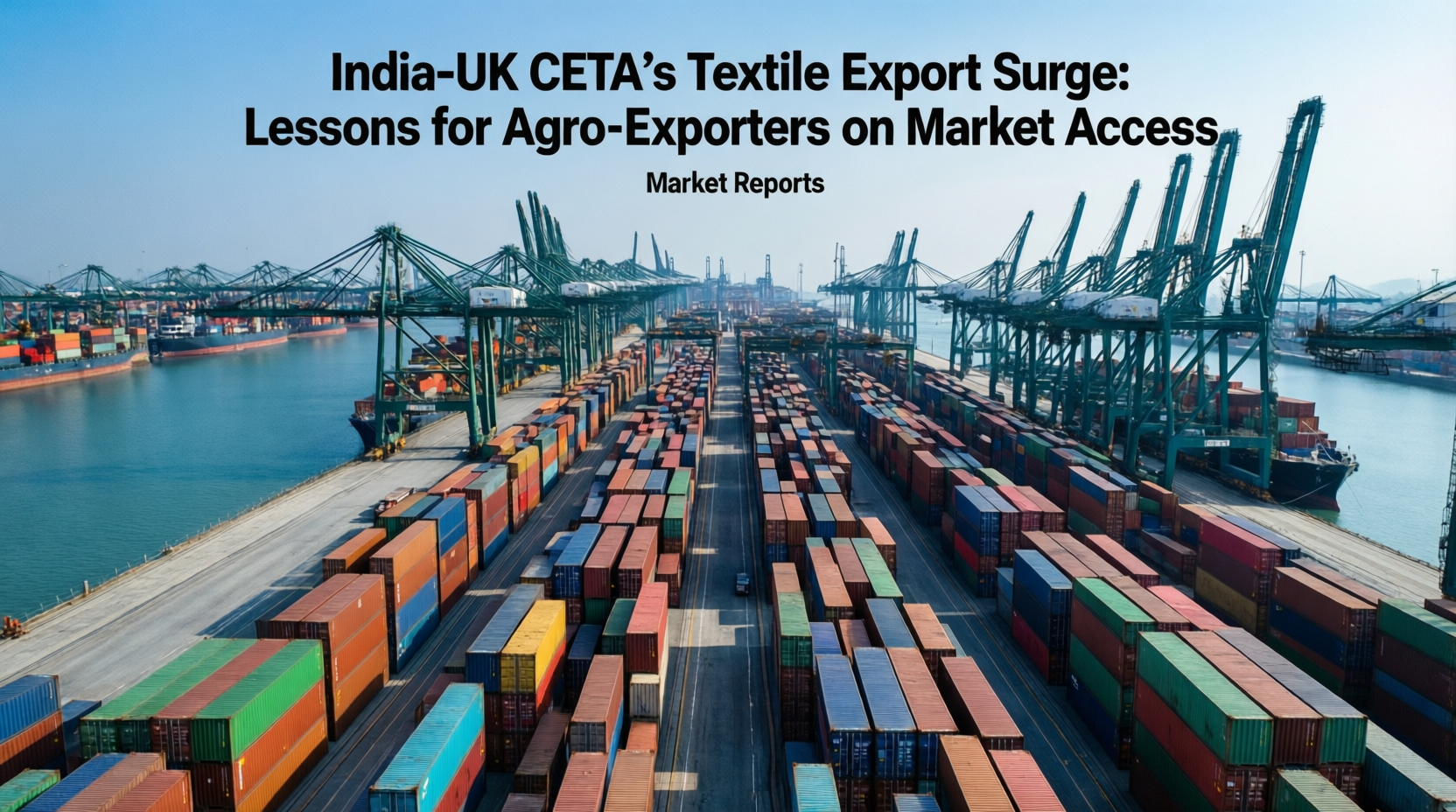
Shortly after the India-UK Comprehensive Economic and Trade Agreement (CETA) came into effect on July 15, 2026, Indian textile exports to the UK recorded a remarkable 12% increase. This export surge underscores how reduced tariffs and smoother regulatory measures under CETA can unlock new trade avenues. For India’s agro-exporters, understanding the strategies behind this growth offers valuable lessons to maximize their own market access into the UK.
How has the India-UK CETA specifically enabled textile export growth?
India-UK CETA eliminated or significantly reduced tariffs on a broad range of textile products, making Indian exports more price-competitive in the UK market. Additionally, simplified customs procedures and better regulatory alignment cut shipment times and compliance costs, facilitating an export order surge ahead of and after the agreement’s rollout in July 2026.
What tangible export gains have textiles experienced since CETA's implementation?
Post-CETA implementation, India saw a 12% rise in export volumes of textiles and garments to the UK. Exporters reported faster customs clearance and fewer non-tariff barriers, positively impacting supply chain reliability and buyer confidence, resulting in expanded contracts and repeat orders.
How can agro-exporters replicate textile export success under the India-UK CETA?
- Identify agro products benefiting from tariff reductions under CETA, such as certain spices, processed foods, and horticultural items.
- Ensure compliance with UK phytosanitary and food safety standards to meet new regulatory benchmarks.
- Leverage government bodies like APEDA for certification, market intelligence, and export facilitation programs aligned to CETA provisions.
- Invest in cold chain and logistics solutions that reduce lead times and preserve product quality.
- Attend trade fairs like the UK’s Food & Drink Expo to network and showcase qualifying agro products under improved tariff conditions.
What regulatory challenges should agro-exporters anticipate despite tariff benefits?
While tariffs have eased, agro-exporters must navigate UK-specific regulations on contaminants, residue limits, and traceability. For example, compliance with UK Food Safety Act provisions and SPS measures remains essential. Early engagement with certification bodies and familiarization with border control processes will mitigate clearance delays.
Key quote from an export policy expert
“The India-UK CETA creates a competitive edge through tariff cuts, but the real advantage for agro-exporters will come from meticulous alignment with UK food safety and quality standards. Combining tariff benefits with compliance unlocks the full potential of these new market opportunities.” — Dr. Meera Krishnan, Trade Policy Specialist
How important is logistics infrastructure for agro-export growth post-CETA?
Robust logistics are critical as agro-products are often perishable. The textile sector’s success includes improved freight routes and customs modernization under CETA, trends agro-exporters must also prioritize. Investments in refrigerated transport, seamless documentation, and third-party logistics partnerships ensure quicker market delivery and quality retention.
What role do government export bodies play in maximizing CETA benefits for agro-exporters?
Agencies like APEDA provide indispensable exporter support, including guidance on market access protocols, assistance with certifications, and facilitation at trade events. They also publish updates on tariff schedules under CETA to help exporters identify new opportunities and compliance requirements, boosting export readiness and competitiveness.
Pro Tip
Actionable insight: Agro-exporters should leverage India-UK CETA’s tariff cuts timely by ensuring all UK-specific product certifications are secured and aligning supply chains to fast-track customs clearance and delivery, mirroring the textile sector’s export playbook.
What future trends in India-UK agro trade can exporters prepare for?
Beyond tariff elimination, increased regulatory cooperation between India and the UK may simplify SPS certification and promote sustainability standards. Opportunities for organic and processed agro-products are expected to grow, especially with rising UK demand for specialty foods. Indian exporters positioned now to meet these evolving requirements stand to gain first-mover advantages.
Key takeaways
- India-UK CETA’s tariff reductions led to a 12% surge in textile exports, underscoring the impact of improved market access.
- Agro-exporters can benefit from similar tariff cuts by ensuring strict compliance with UK regulatory standards.
- Strong logistics and cold chain systems are critical to preserving agro-product quality and meeting delivery timelines.
- Government bodies like APEDA play a key role in guiding exporters on certification and trade facilitation under CETA.
Frequently asked questions
What products saw tariff benefits under India-UK CETA?
The India-UK CETA reduced or eliminated tariffs on various textiles, garments, and specific agro products like spices, processed foods, and horticulture items, enhancing their competitiveness in the UK market.
How can agro-exporters ensure compliance with UK standards post-CETA?
Agro-exporters should obtain certifications such as phytosanitary certificates, comply with UK food safety laws, and work closely with agencies like APEDA to meet all regulatory requirements.
Does the CETA improve customs clearance processes?
Yes, the India-UK CETA streamlines customs procedures, reducing delays and costs for exporters, as witnessed by the textile sector’s export growth after the agreement’s rollout.
What logistics improvements should agro-exporters focus on?
Investing in refrigerated transport, efficient sea and air freight options, and partnering with experienced logistics providers will help agro-exporters maintain product quality and meet delivery deadlines.
Where can exporters get support to leverage India-UK CETA?
Exporters should engage with APEDA and attend relevant trade fairs in the UK to gain insights, certifications, and market access assistance aligned with CETA provisions.
- Written and reviewed by our in-house trade experts — not AI-generated filler.
- Market figures come from live platform data across thousands of verified trades.
- Every buyer and supplier on The Trade Union is identity- and document-verified.
- Guides are updated as regulations and market conditions change.