On this page
- Bulk Spice Exports Face Decline, But Value-Added Spice Products Rise
- What’s Behind the Surge in Processed Spices Global Market Demand?
- Export Processed Spice Derivatives from India: Opportunities and Challenges
- India Spice Export Strategy Amid Price Drop: How Exporters Should Pivot
- Regulatory Shifts Affecting Spice Exporters in 2026
- Final Thoughts: Future-Proofing India’s Spice Exports
India’s spice export market faces a critical juncture in 2026, as falling bulk demand meets soaring logistics costs. Exporters who pivot to processed spice derivatives and value-added products are discovering a resilient, fast-growing global demand.
Bulk Spice Exports Face Decline, But Value-Added Spice Products Rise
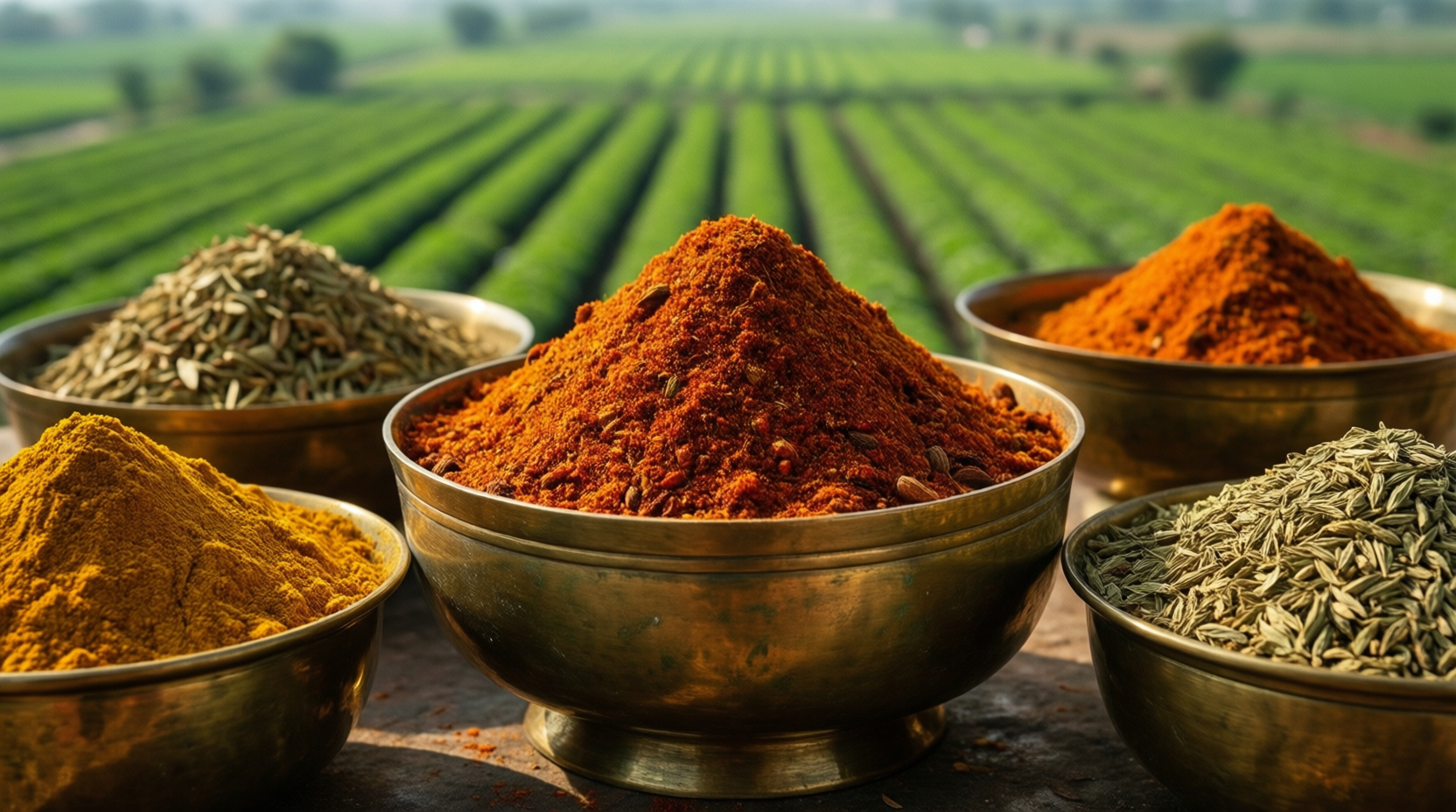
In FY26, India’s spice export earnings declined by 6% to USD 4.43 billion, driven largely by reduced overseas appetite for traditional commodities like chilli and cumin. However, processed spice derivatives—turmeric oleoresin, curcumin, paprika extracts, essential oils—are emerging as promising segments. As buyers seek convenience, standardisation, and multi-industry applications, this shift is redefining India’s spice export strategy amid price drops.
What’s Behind the Surge in Processed Spices Global Market Demand?
- Pharma and cosmetics sectors drive turmeric and curcumin exports.
- Food processing industries demand standardised spice extracts over raw forms.
- Ingredient traceability gains importance amid tightening regulations.
- Global food safety standards increasingly favour value-added spice products.
- Innovation in ready-to-use spice blends and concentrates.
These trends are reflected in the market with turmeric prices soaring above ₹16,000/quintal in early 2026, thanks to demand from pharmaceutical and cosmetics industries, even as bulk cumin prices face a glut and continue to soften in export markets.
Export Processed Spice Derivatives from India: Opportunities and Challenges
- Access to new markets: With the India–UK CETA effective mid-July 2026, Indian agricultural products—including spice derivatives—can enter the UK duty-free.
- Logistics headwinds: Shipping costs now range USD 7,000–13,000/FEU, with peak season surcharges biting into margins.
- Rising demand in high-value segments, particularly in Europe and North America.
- Greater scrutiny and compliance requirements in destination markets.
Exporters must navigate surging freight rates, tighter port documentation, and evolving regulations. Yet the price resilience and premium realised on processed derivatives can buffer against the shrinkage seen in bulk spice exports.
India Spice Export Strategy Amid Price Drop: How Exporters Should Pivot
- 1Invest in processing infrastructure for spice derivatives (oleoresins, essential oils, extracts).
- 2Build standardised, traceable supply chains to meet global regulatory norms.
- 3Leverage FTAs: Target UK and EU buyers post-CETA for premium segments.
- 4Explore strategic freight contracts or pooled shipments to hedge against rate volatility.
- 5Expand into new product formats—spice blends, capsules, and concentrates.
Processed spice derivatives offer Indian exporters both a value and volume game. In a volatile commodity climate, differentiation, traceability, and compliance are keys to global market leadership.
Regulatory Shifts Affecting Spice Exporters in 2026
- RBI’s new FEMA Export–Import Regulations requires unified EDF filing and revised payment timelines (from October 2026).
- Enhanced compliance at African ports—delays and demurrage due to stricter paperwork.
- Guinea bans single-use plastic packaging in imports.
Ready to capture new export opportunities in spice derivatives? Tradeleaf’s platform connects reliable Indian processor-exporters with global buyers, offers export documentation support, and real-time analytics on market trends.
Final Thoughts: Future-Proofing India’s Spice Exports
As volatility rocks the global commodity market, Indian exporters that prioritise value-added products and agile, compliant operations will thrive. The pivot to processed spice derivatives is not just an option—it’s the new frontier for sustaining global leadership in spices amid the dynamics of 2026.
- Written and reviewed by our in-house trade experts — not AI-generated filler.
- Market figures come from live platform data across thousands of verified trades.
- Every buyer and supplier on The Trade Union is identity- and document-verified.
- Guides are updated as regulations and market conditions change.