On this page
- How did South Africa achieve 11% agro-export growth amidst port bottlenecks?
- What impact did export logistics challenges have on South African agro-exports?
- Which commodities contributed most to South Africa’s export growth in Q1 2026?
- How did commodity price fluctuations affect South African agricultural exports?
- What strategies are South African exporters adopting to overcome logistical bottlenecks?
- How do South Africa’s agro-export developments compare with other African exporters in Q1 2026?
- Key takeaways
- FAQ
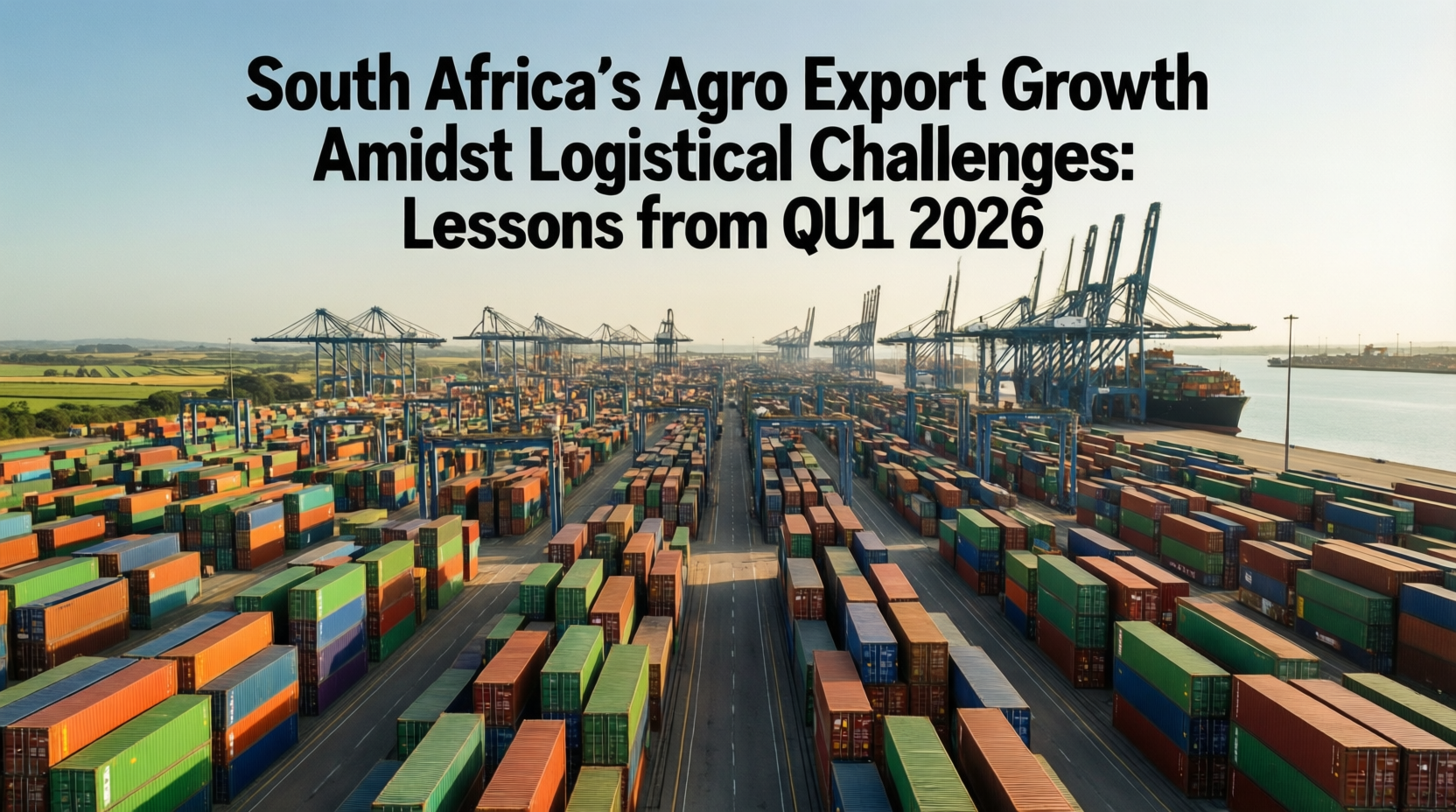
In the first quarter of 2026, South Africa’s agricultural export sector demonstrated notable growth, increasing exports by 11% year-on-year despite significant logistical challenges such as port bottlenecks and global trade uncertainties. This performance underscores the sector's adaptive strategies and market resilience amid ongoing difficulties.
How did South Africa achieve 11% agro-export growth amidst port bottlenecks?
South Africa's agricultural exports surged to $3.7 billion in Q1 2026, propelled by a combination of increased export volumes and firmer commodity prices. Exporters optimized supply chain management by diversifying export routes, improving inland transport efficiency, and leveraging demand from key markets to mitigate port delays.
What impact did export logistics challenges have on South African agro-exports?
Port bottlenecks and congestion posed significant hurdles, causing delays and increased costs. However, proactive coordination between exporters, port authorities, and logistics providers helped alleviate some pressure. Despite these obstacles, export growth indicates effective crisis management and adaptation in logistic planning.
Which commodities contributed most to South Africa’s export growth in Q1 2026?
- Citrus fruits saw steady demand in both European and Asian markets.
- Maize exports increased as global buyers sought competitive pricing.
- Wine and nuts maintained strong international interest.
- Horticultural products like deciduous fruits contributed to volume growth.
How did commodity price fluctuations affect South African agricultural exports?
Firmer commodity prices globally supported higher export values despite challenging logistics. Price stability in key crops helped exporters maintain competitiveness and profitability, buffering the sector from some adverse impacts of trade uncertainties and overhead cost increases due to delays.
What strategies are South African exporters adopting to overcome logistical bottlenecks?
- Diversification of shipping routes and ports to reduce dependency on congested terminals.
- Investment in inland transport infrastructure and cold chain logistics.
- Enhanced coordination with customs and port authorities to expedite clearance processes.
- Leveraging technology for better supply chain visibility and planning.
How do South Africa’s agro-export developments compare with other African exporters in Q1 2026?
While Ethiopia and Egypt also showed strong export figures—Ethiopia earning $3 billion from coffee and Egypt exceeding 5 million tons of agricultural exports—South Africa’s 11% growth despite logistical challenges signals competitive resilience. China’s opening of coffee markets to all 53 African countries may further stimulate regional export opportunities.
"South Africa’s agricultural export growth, despite considerable logistical hurdles, is a testament to the sector's capacity for innovation and adaptability in a fluctuating global market." – Dr. Lebo Nkosi, Agricultural Economist
Exporter Insight
Key lesson: Building flexible logistics strategies and strengthening stakeholder collaboration are critical for sustaining export growth amid infrastructural challenges.
Key takeaways
- South Africa's agro-exports grew 11% to $3.7 billion in Q1 2026 despite port bottlenecks and trade uncertainties.
- Increased export volumes and stronger commodity prices were primary growth drivers.
- Strategic logistic adaptations, including route diversification, eased bottleneck impacts.
- Regional African agro-export growth, including Ethiopia and Egypt, complements South Africa’s resilience.
Frequently asked questions
What caused South Africa's agricultural exports to grow despite port issues in early 2026?
Growth was driven by higher export volumes, firmer commodity prices, and exporters’ strategic adjustments to logistics challenges such as diversifying shipping routes and improving inland transport.
How significant are port bottlenecks for South Africa's agro-exporters?
Port bottlenecks create delays and increase costs, but proactive coordination and logistics innovations have helped exporters mitigate these challenges and sustain export growth.
Which agricultural products led South Africa’s export growth in Q1 2026?
Key contributors included citrus fruits, maize, wine, nuts, and horticultural products such as deciduous fruits.
How do commodity prices impact South Africa’s agricultural exports?
Stable and firmer commodity prices increased export earnings, helping exporters offset delays and logistical costs caused by port congestion and trade uncertainties.
What can exporters learn from South Africa’s 2026 Q1 performance?
Flexibility in logistics management, collaboration among stakeholders, and leveraging demand in key export markets are essential strategies to overcome infrastructure challenges and sustain growth.
- Written and reviewed by our in-house trade experts — not AI-generated filler.
- Market figures come from live platform data across thousands of verified trades.
- Every buyer and supplier on The Trade Union is identity- and document-verified.
- Guides are updated as regulations and market conditions change.