On this page
- Why MSC’s Vizhinjam Port Investment Matters for Agro-Exports
- Transshipment Capacity: A New Chapter for Indian Ports
- Strategic Shipping Routes and Network Expansion
- The Impact on Export Logistics and Costs
- What Exporters Need to Watch: 2026 and Beyond
- Conclusion: Vizhinjam Sets New Tempo for Indian Agro Logistics
India’s port landscape is undergoing a seismic shift with MSC’s $1.4 billion investment in Vizhinjam Port. As India’s first truly deep-water transshipment hub, Vizhinjam is set to revolutionize agro-export supply chains and shipping routes, providing long-awaited relief from congested ports and capacity bottlenecks.
Why MSC’s Vizhinjam Port Investment Matters for Agro-Exports
When Adani Ports finalized the sale of a 49% stake in Vizhinjam Port to Mediterranean Shipping Company (MSC) for $1.4 billion, it marked the largest private foreign investment in Indian port infrastructure history. For agro-exporters, this partnership is more than a headline: it’s a catalyst for change in how India moves its agricultural commodities to the world.
Transshipment Capacity: A New Chapter for Indian Ports
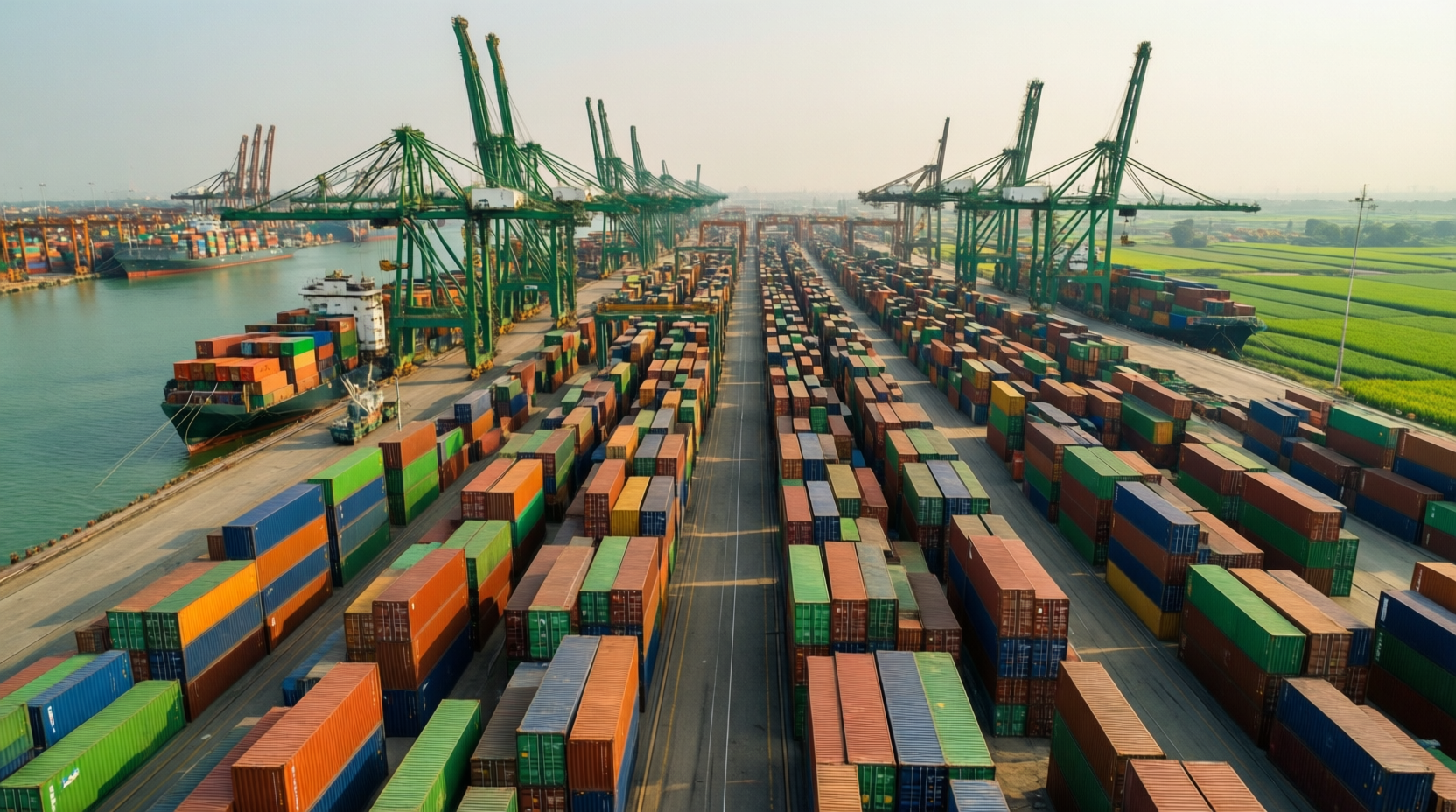
India’s major ports handled a record 915 million tonnes of cargo in FY2025-26, but chronic congestion—especially at gateways like JNPT—has strained exporters. With its 20-meter draught and proximity to the global shipping lane, Vizhinjam promises state-of-the-art transshipment capacity designed for the world’s largest vessels. Agro-cargo will benefit from direct connections, reducing dependency on foreign hub ports like Colombo and dramatically streamlining connections to Africa, Europe, and the Middle East.
Strategic Shipping Routes and Network Expansion
The new MSC-backed transshipment hub at Vizhinjam will reroute global shipping patterns. As shipping lines add new direct calls, agro exporters can expect faster transit times, greater schedule reliability, and reduced re-routing through secondary ports. For southern and eastern India—heartlands for spices, rice, tea, and value-added agro products—these new routes could slash costs and improve product shelf-life.
The Impact on Export Logistics and Costs
Port congestion at JNPT recently pushed export costs up by as much as ₹30,000 per container, further exacerbated by limited availability of outbound slots. With Vizhinjam set to absorb a significant share of agro-cargo, exporters will see relief not only in lower logistics costs but also more predictable vessel schedules. The port's digitalized operations and port performance governance will also facilitate better traceability and live updates for cargo movement.
- Expanded capacity for processed spices, grains, and perishables
- Lower demurrage and warehousing risks
- New direct connections to Africa, Middle East, and Europe
- Reduced transit times for time-sensitive agro-exports
Vizhinjam isn’t just a port investment—it’s a foundational shift for India’s agro-logistics competitiveness. For the first time, exporters can match global lead times and reliability.
What Exporters Need to Watch: 2026 and Beyond
- 1Booking priorities: Early engagement with MSC for space on inaugural Vizhinjam services
- 2Processed and value-added goods: Leverage new cold-chain and direct routes for higher-margin products
- 3Regulatory incentives: Monitor RoDTEP scheme extensions to further offset freight costs
- 4Digital platforms: Tap into live rate and capacity visibility via export platforms
Want to get ahead of the MSC–Vizhinjam wave? The Trade Union offers exporters real-time updates, port analytics, and exclusive digital booking integrations for seamless agro-exports.
Conclusion: Vizhinjam Sets New Tempo for Indian Agro Logistics
With MSC’s historic investment, Vizhinjam Port is poised to transform India’s agro-export supply chains by providing new capacity, direct global connections, and much-needed relief from logistical bottlenecks. Exporters who adapt early to this new infrastructure era stand to gain faster access to key markets, sharper pricing power, and greater resilience amid global shipping shifts.
- Written and reviewed by our in-house trade experts — not AI-generated filler.
- Market figures come from live platform data across thousands of verified trades.
- Every buyer and supplier on The Trade Union is identity- and document-verified.
- Guides are updated as regulations and market conditions change.